

If you’ve ever tried to lose weight, you’ve probably heard the advice: “Just eat less.”
But eating less without structure often leads to hunger, frustration, cravings, and eventually giving up.
A proper portion control guide isn’t about starving yourself. It’s about understanding how much your body actually needs — and structuring meals in a way that keeps you satisfied while supporting your goals.
In this guide, you’ll learn how to balance calories intelligently without extreme restriction.
Why Portion Control Matters
Calories determine weight change — but portion size determines calorie intake.
Many people eat healthy foods but in excessive quantities. Even nutritious meals can lead to weight gain if portions aren’t balanced.
Portion control helps you:
- Manage calorie intake
- Stabilize blood sugar
- Reduce overeating
- Maintain energy levels
- Support sustainable fat loss
And most importantly, it helps you stay consistent.
Portion Control vs. Starvation
Starvation diets reduce calories too aggressively.
Portion control adjusts meal size strategically while maintaining:
- Adequate protein
- Healthy fats
- Complex carbohydrates
- Essential micronutrients
When meals are balanced correctly, hunger stays manageable.
The Balanced Plate Method
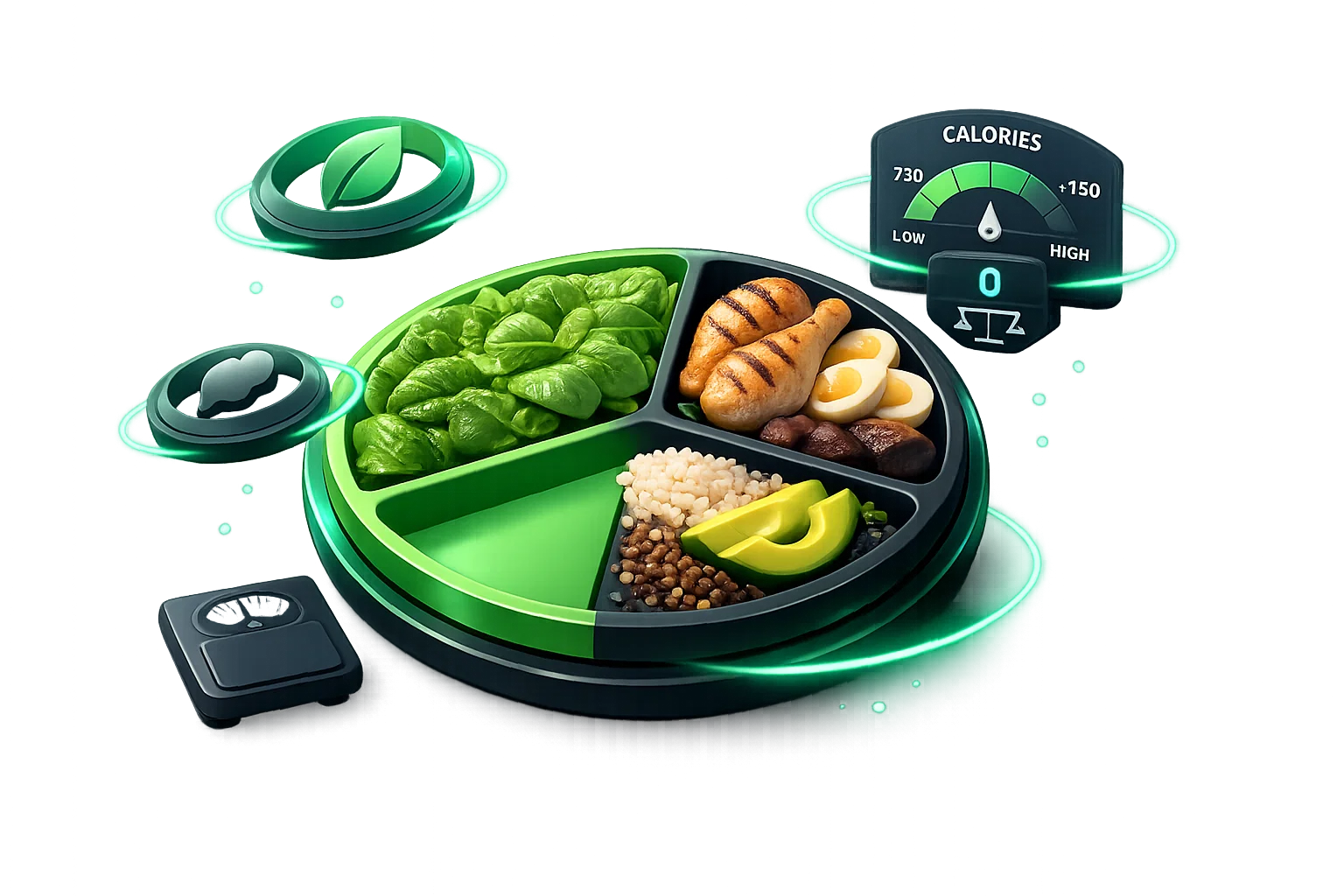
One of the simplest strategies in any portion control guide is the balanced plate approach.
Divide your plate into sections:
- Half: Vegetables (fiber-rich, low calorie)
- Quarter: Lean protein
- Quarter: Complex carbohydrates
Add small portions of healthy fats as needed.
This structure automatically controls calorie intake without measuring every gram.
Why Protein Is Essential
Protein helps control hunger better than carbs or fats.
It:
- Increases satiety
- Preserves lean muscle
- Supports metabolism
- Reduces cravings
Each meal should include a visible protein source. This prevents overeating later in the day.
Use Your Hand as a Measurement Tool
You don’t always need a scale.
Simple hand-based portion estimates:
- Protein → Palm-sized
- Carbohydrates → Fist-sized
- Healthy fats → Thumb-sized
- Vegetables → Two handfuls
This method makes portion control practical even when dining out.
Control High-Calorie Additions
Many calories come from small extras:
- Salad dressings
- Sauces
- Cooking oils
- Sugary beverages
- Processed snacks
Reducing these additions can significantly lower daily calorie intake without shrinking meal size.
Slow Down While Eating
Eating too quickly prevents your brain from registering fullness.
To improve portion control:
- Chew slowly
- Avoid distractions
- Pause between bites
- Stop at 80% fullness
Mindful eating reduces unnecessary second servings.
Meal Timing and Portion Balance
Skipping meals often leads to overeating later.
A structured eating schedule helps regulate appetite.
Example structure:
- Balanced breakfast
- Moderate lunch
- Light snack
- Controlled dinner
Evenly spaced meals help maintain stable energy and prevent binge patterns.
Avoid Liquid Calories
Liquid calories add up quickly and don’t provide the same fullness as solid foods.
Common hidden sources:
- Sugary coffee drinks
- Fruit juices
- Energy drinks
- Alcohol
Switching to water, herbal tea, or black coffee can reduce calorie intake without affecting meal size.
Fiber Helps You Feel Full
Fiber-rich foods increase satiety without adding excessive calories.
Good sources include:
- Vegetables
- Fruits
- Legumes
- Whole grains
Fiber slows digestion, stabilizes blood sugar, and improves portion control naturally.
Adjust Portions Based on Goals
Your portion size should match your objective.
For fat loss:
- Slightly smaller carb portions
- Higher vegetable intake
- Adequate protein
For muscle gain:
- Moderate carb increase
- Balanced protein
- Slight calorie surplus
For maintenance:
- Balanced macro portions
Personalization is key.
Emotional Eating vs. Physical Hunger
Sometimes hunger isn’t physical — it’s emotional.
Ask yourself:
- Am I truly hungry?
- Or am I bored, stressed, or tired?
Learning to distinguish between emotional and physical hunger improves long-term portion control.
Track Without Obsessing
Tracking intake temporarily can increase awareness.
However, the goal is not lifelong calorie counting.
Instead, use tracking as a short-term learning tool to understand:
- Serving sizes
- Hidden calories
- Nutrient balance
Once awareness improves, intuitive control becomes easier.
Common Portion Control Mistakes
❌ Skipping protein
❌ Eating directly from packages
❌ Ignoring calorie-dense snacks
❌ Undereating early and overeating at night
❌ Believing healthy foods can be unlimited
Even healthy foods require balance.
Sustainability Is the Real Goal
The best portion control strategy is one you can maintain.
Extreme restriction leads to:
- Cravings
- Metabolic slowdown
- Energy dips
- Binge cycles
Balanced calorie control leads to:
- Consistent fat loss
- Stable energy
- Better digestion
- Long-term success
When Personalization Helps
Every individual’s metabolism, activity level, and hunger signals differ.
A structured nutrition plan can help determine:
- Ideal calorie intake
- Macro distribution
- Meal timing
- Portion adjustments over time
If you’re struggling to find the right balance, a personalized approach can provide clarity and structure.
Final Thoughts
A strong portion control guide isn’t about shrinking your meals — it’s about structuring them intelligently.
When you:
- Balance macronutrients
- Prioritize protein
- Increase fiber
- Control calorie-dense additions
- Eat mindfully
You naturally balance calories without starving.
Sustainable progress comes from precision, not punishment.
Master portion control, and you master consistency.