

If you’ve ever searched for a weight loss nutrition guide, you’ve probably noticed something frustrating — every source says something different.
Cut carbs.
Don’t cut carbs.
Eat six meals a day.
Try intermittent fasting.
Avoid fats.
Eat more healthy fats.
The confusion is endless.
But here’s the truth: sustainable weight loss isn’t about extreme rules or trendy diets. It’s about applying science-based nutrition principles in a way that fits your body and lifestyle.
In this guide, we’ll break down practical, research-backed strategies that actually work — and more importantly, that you can maintain long term.
Why Most Weight Loss Diets Fail
Before diving into solutions, let’s address the core problem.
Most diets fail because they are:
- Too restrictive
- Unrealistic for daily life
- Not personalized
- Focused only on short-term results
Extreme calorie cutting might lead to quick results, but it often slows metabolism, increases cravings, and leads to rebound weight gain.
Sustainable fat loss requires structure — not starvation.
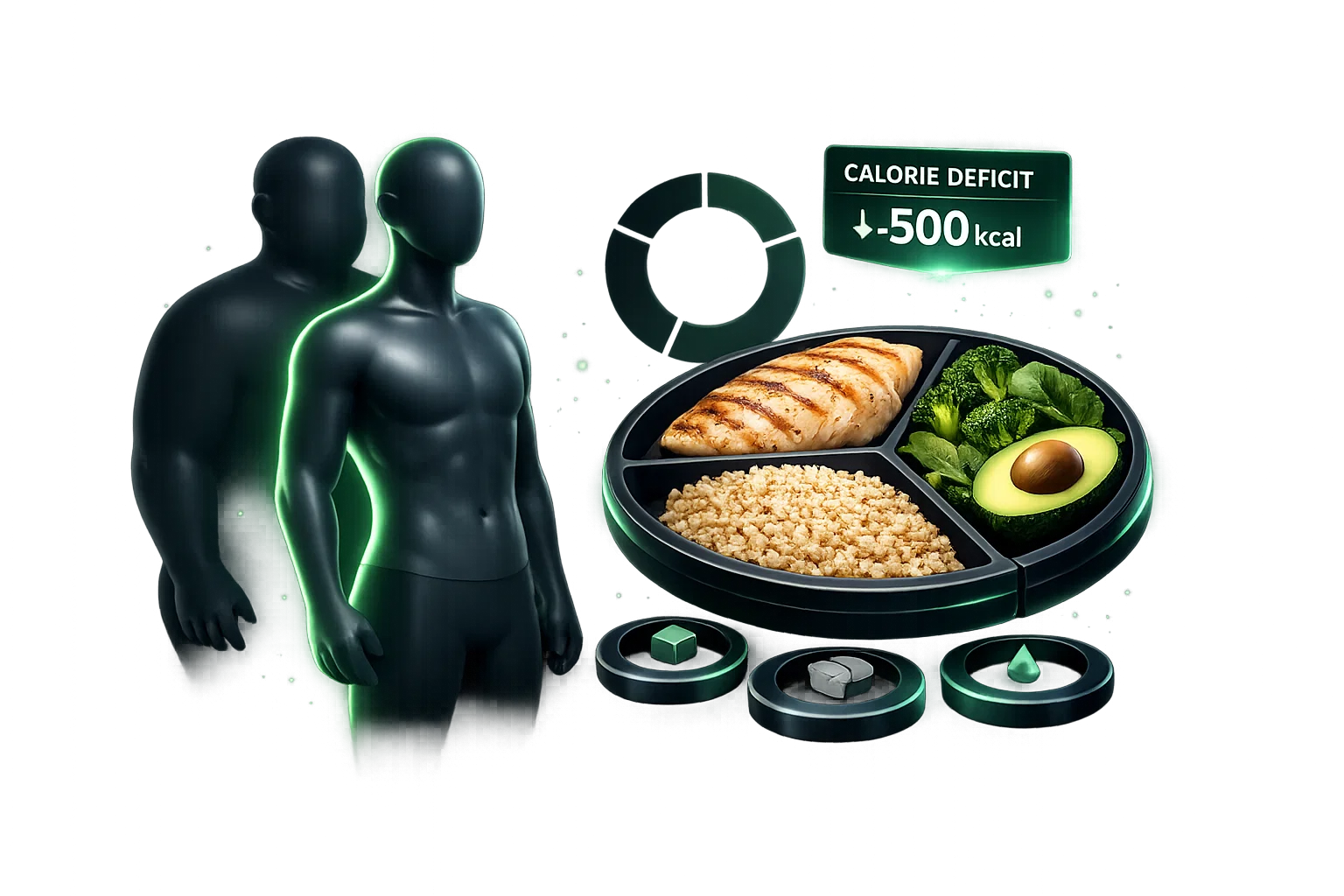
1. Understand the Calorie Deficit (The Right Way)
Weight loss fundamentally requires a calorie deficit — meaning you consume fewer calories than you burn.
However, the mistake most people make is creating a deficit that’s too aggressive.
A smart approach includes:
- Mild to moderate calorie reduction
- Balanced macronutrients
- Protein priority
- Structured portion control
A moderate deficit preserves energy, protects muscle mass, and reduces burnout.
2. Prioritize Protein for Fat Loss
Protein is one of the most important nutrients in any weight loss nutrition guide.
Why?
- Helps preserve lean muscle
- Increases satiety (you feel fuller longer)
- Boosts thermic effect (burns more calories during digestion)
Each meal should include a quality protein source such as:
- Lean meats
- Eggs
- Greek yogurt
- Plant-based proteins
- Legumes
Without adequate protein, weight loss often results in muscle loss rather than fat loss.
3. Control Portions Without Eliminating Food Groups
Many people believe weight loss requires eliminating carbs or fats entirely.
This isn’t true.
Instead of removing food groups, focus on:
- Balanced portions
- Whole food choices
- Reduced refined sugar
- Controlled calorie-dense foods
Portion awareness is more powerful than strict restriction.
For example:
- Half plate vegetables
- Quarter plate lean protein
- Quarter plate complex carbohydrates
This method creates balance while keeping meals satisfying.
4. Choose Quality Carbohydrates
Carbohydrates are often blamed for weight gain, but quality matters more than quantity.
Better carb choices include:
- Oats
- Brown rice
- Sweet potatoes
- Quinoa
- Whole fruits
Avoiding heavily processed carbs while keeping complex carbohydrates in moderate portions supports energy and fat loss simultaneously.
5. Manage Fats Intelligently
Healthy fats are essential for hormone balance and satiety.
Include moderate amounts of:
- Avocado
- Nuts and seeds
- Olive oil
- Fatty fish
The key is moderation. Fats are calorie-dense, so portion control is essential.
6. Structure Meal Timing Around Your Routine
Meal timing doesn’t have to be complicated.
What matters most:
- Avoid long gaps that trigger overeating
- Align meals with activity levels
- Ensure balanced pre- and post-workout nutrition
If you train in the morning, fuel properly.
If you work long office hours, plan structured snack breaks.
Consistency in timing improves energy stability and appetite control.
7. Stay Hydrated (Often Overlooked)
Hydration plays a bigger role in weight loss than many realize.
Dehydration can:
- Increase cravings
- Reduce performance
- Slow metabolism slightly
- Increase fatigue
A simple strategy:
Drink water consistently throughout the day, especially before meals.
Sometimes what feels like hunger is mild dehydration.
8. Focus on Long-Term Habit Building
Quick fixes create temporary results.
Real progress comes from habits such as:
- Grocery planning
- Meal preparation
- Balanced plate awareness
- Mindful eating
The goal is to make healthy eating automatic — not forced.
9. Monitor Progress Beyond the Scale
The scale doesn’t tell the full story.
Track:
- Waist measurements
- Strength improvements
- Energy levels
- Sleep quality
- Clothing fit
Fat loss may occur even when scale weight fluctuates due to water retention.
10. Avoid the “All or Nothing” Mindset
One unhealthy meal does not erase progress.
The biggest transformation happens when you:
- Stay consistent 80–90% of the time
- Allow flexibility
- Avoid guilt-based eating
Sustainable weight loss is about patterns — not perfection.
Personalized Approach Matters
Every person’s metabolism, lifestyle, and activity level is different.
That’s why a structured, customized approach often produces better long-term results than generic meal templates.
A well-designed weight loss plan considers:
- Body composition
- Activity level
- Food preferences
- Routine constraints
- Digestive health
- Energy demands
If you’re serious about fat loss and want a plan built around your specific goals, exploring structured nutrition services or requesting a personalized strategy can make a measurable difference.
Final Thoughts
A true weight loss nutrition guide isn’t about eliminating entire food groups or chasing extreme trends.
It’s about:
- Balanced calorie control
- Protein prioritization
- Smart portion structure
- Quality food choices
- Consistent habits
When science meets sustainability, weight loss becomes predictable, structured, and maintainable.
If you’re ready to move beyond generic advice and implement strategies that actually work, the key is precision — not restriction.